Roguelike Slaying: Enemy Density Formulas and Screen Readability
Roguelike动作

Roguelike Slaying: Enemy Density Formulas and Screen Readability

This article dissects the core mechanics of roguelike slaying games, breaking down the construction of enemy density curves to create dynamic combat pacing. It explains how director systems use calculation to control enemy distribution for screen readability, analyzes hard rules limiting special effects to ensure visual clarity, and reveals the satisfaction derived from linear enemy growth paired with exponential player damage. The guide provides actionable advice for developers to balance numerical values with player experience.

Three-Card Climb Lab: A Choice/Strategy Playground Where the Choice Space Is a Dial
策略决策成长 / 数值

Three-Card Climb Lab: A Choice/Strategy Playground Where the Choice Space Is a Dial

Pick 1 card per round; your stats auto-resolve against a guardian that grows each round. Sliders expose the choice space itself as the difficulty dial.

Pacman City: Turning "Dodge the Ghosts" into Timed Route Planning
躲避解谜

Pacman City: Turning "Dodge the Ghosts" into Timed Route Planning

120 seconds, 3 lives, 323 dots: eat and dodge through a block-city maze, where the 8-second power-pellet reversal is the only rhythm switch that matters.

Pull the Pin: Sequential Penalties and 'Fake Difficulty'
解谜物理

Pull the Pin: Sequential Penalties and 'Fake Difficulty'

Deconstructing the penalty mechanics and fake difficulty design in pull-the-pin puzzles. The article analyzes how sequence errors trigger immediate restarts, leveraging low forgiveness to create a 'seemingly hard, actually fake' challenge experience. It reveals the underlying logic of building levels via rule-based constraints rather than complex operations, offering high-value design references for puzzle games.

Survival Countdown: Designing Time Pressure and the 'Final 10 Seconds' Effect
关卡动作

Survival Countdown: Designing Time Pressure and the 'Final 10 Seconds' Effect

Analyze time pressure mechanics focusing on non-malicious dynamic curves and forgiveness windows. Deep dive into the 'Final 10 Seconds' effect to reveal how countdowns alter risk-reward ratios, driving players toward aggressive decisions in high-stakes endings, providing empirical strategies for building urgency in action-dodging levels.

Bubble Shooter: Aim Once, Score by the Cascade
射击解谜

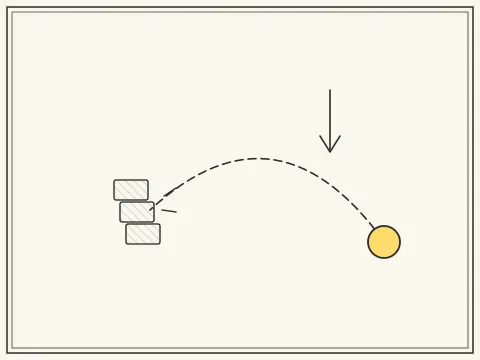
Bubble Shooter: Aim Once, Score by the Cascade

A bubble-shooter teardown: aim angle folds into a column pick, 8-way pops raise density, and a ceiling drop every 10 shots makes pressure countable.

Spot the Difference: Mechanics for Robust Puzzle Design
推荐解谜

Spot the Difference: Mechanics for Robust Puzzle Design

An in-depth analysis of difference point types and distribution logic to prevent instant completions. Learn how to implement visual guidance systems that regulate scanning pace, enhance puzzle depth, and design efficient hint mechanisms that deter cheating while ensuring a compelling player experience.

Number Merge (2048 Variant): Failure Probability Control and Perceived Randomness
消除生成

Number Merge (2048 Variant): Failure Probability Control and Perceived Randomness

Deep dive into the core mechanics of number merge variants: dynamically adjusting failure probability thresholds to softly control difficulty, avoiding unwinnable states while maintaining tension. The article details the pseudo-random generation algorithm logic, ensuring number distribution appears random yet remains controlled, precisely balancing player experience with numerical stability to help developers build high-retention elimination levels.

8-Ball Pool: One Drag, Two Modules, and a Full Rules Engine Behind Every Shot
物理射击

8-Ball Pool: One Drag, Two Modules, and a Full Rules Engine Behind Every Shot

A physics rebuild of 8-ball pool: drag distance folds into 18 power levels, all-stopped settlement keeps the rules trustworthy, and AI aim error keeps it alive.

Tap-to-Evolve: Feedback Loops and Inflation Thresholds
推荐点击

Tap-to-Evolve: Feedback Loops and Inflation Thresholds

This article deconstructs the tap-to-evolve mechanic, analyzing the click feedback loop and numerical inflation thresholds. It details how clicks drive upgrade pacing and maintain numerical readability, equipping developers with core loop design and balance strategies for casual games.

Drag-and-Drop Placement: Manual Yield Gap and Offline Reward Formula
放置数值

Drag-and-Drop Placement: Balancing Manual Yield Gaps and Offline Rewards

A deep dive into the numerical logic of drag-and-drop placement mechanics. By comparing manual yield gaps with offline reward formulas, we derive a balancing equation to curb excessive manual play. The guide covers cap setting, anti-farming mechanisms, and reward curve design, offering actionable solutions to the 'tiring when active, losing out when idle' player pain point.

Organizing Combat Unit Behavior with State Machines
战斗状态机

Organizing Combat Unit Behavior with State Machines

This article dissects the state machine pattern for combat units, detailing how to decompose complex logic into independent state nodes. Readers will master constructing state transition tables to eliminate verbose conditional checks, enabling visual debugging and low-cost expansion while effectively resolving multi-behavior coupling challenges.

1 / 4 ページ · 39 件
前へ次へ