Core Mechanics of Merge & Upgrade Systems
RecomendadoFusão

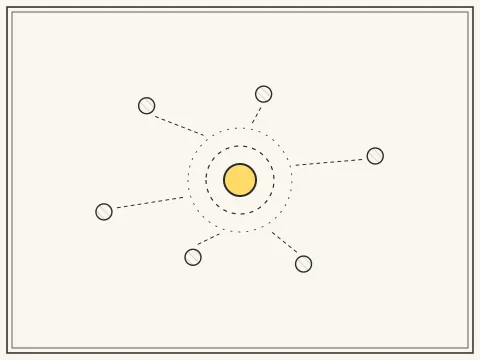
Core Mechanics of Merge & Upgrade Systems

A deep dive into merge and upgrade mechanics, breaking down merge rules, production pacing, and in-game feedback loops. The article outlines the implementation path from gameplay goals to core loops, offering reusable data structures and key numerical design principles to help developers build accessible, high-growth idle merge systems.
Multiple Endings: Trigger Conditions and Player Path Guidance
FasesQuebra-cabeça

Multiple Endings: Trigger Conditions and Player Path Guidance

A deep dive into crafting multiple ending triggers and player path guidance systems. By quantifying core elements, we define clear completion thresholds, build a tiered hint system ranging from strong to no guidance, and design dynamic feedback to balance exploration freedom, helping developers efficiently construct multi-ending narrative structures.

Penalty Kick: One Shot, Two Inputs, Five Rounds of Mounting Pressure
TiroTiming

Penalty Kick: One Shot, Two Inputs, Five Rounds of Mounting Pressure

A minimal penalty shootout: angle and power feed a probability model, every miss scores for the keeper, and a five-round sprint decides the match.

Pull the Pin: Sequential Penalties and 'Fake Difficulty'
Quebra-cabeçaFísica

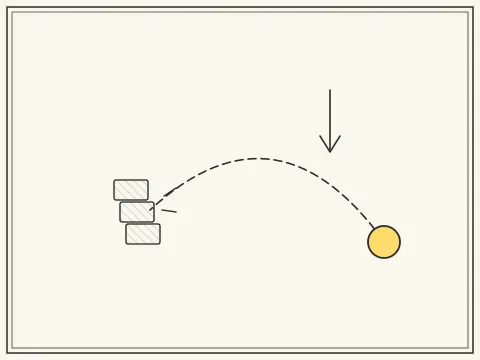
Pull the Pin: Sequential Penalties and 'Fake Difficulty'

Deconstructing the penalty mechanics and fake difficulty design in pull-the-pin puzzles. The article analyzes how sequence errors trigger immediate restarts, leveraging low forgiveness to create a 'seemingly hard, actually fake' challenge experience. It reveals the underlying logic of building levels via rule-based constraints rather than complex operations, offering high-value design references for puzzle games.

Stream Runner: Difficulty as a Speed Curve, UI Reduced to Two Buttons
CorridaEsquiva

Stream Runner: Difficulty as a Speed Curve, UI Reduced to Two Buttons

A minimalist auto-runner case study: score equals distance, a one-obstacle-one-button mapping, and how a 0.6s dodge window keeps high speeds readable.

Tap Dodge: Balancing Failure Tolerance and Bullet Speed Curves
Esquiva

Tap Dodge: Balancing Failure Tolerance and Bullet Speed Curves

A deep dive into the tap dodge mechanic, analyzing hitbox tolerance settings and near-miss feedback to balance failure risk. We also explore constructing bullet speed curves to achieve smooth difficulty progression, providing core design strategies for developers to ensure both responsive controls and long-term player retention.

Tic Tac Toe Showdown: Turn-Based Line-Matching Game
Duelo por turnosGrade

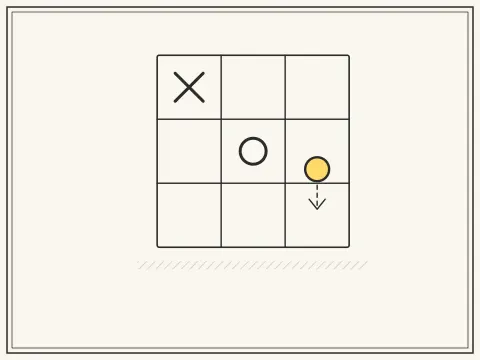
Tic Tac Toe Showdown: Turn-Based Line-Matching Game

Tic Tac Toe Showdown teardown: alternating placement, line detection and a minimax AI on a configurable 3x3 grid, with a playable embedded demo.

Judgment Window Lab: Timing Feel as Two Sliders
TimingEsquiva

Judgment Window Lab: Timing Feel as Two Sliders

A timing lab: 20 beats, one shrinking ring, one judgment circle. Drag Perfect Window (40–150ms) and BPM (60–180) sliders to feel where timing feel comes from.

Bubble Shooter: Aim Once, Score by the Cascade
TiroQuebra-cabeça

Bubble Shooter: Aim Once, Score by the Cascade

A bubble-shooter teardown: aim angle folds into a column pick, 8-way pops raise density, and a ceiling drop every 10 shots makes pressure countable.

Spot the Difference: Mechanics for Robust Puzzle Design
RecomendadoQuebra-cabeça

Spot the Difference: Mechanics for Robust Puzzle Design

An in-depth analysis of difference point types and distribution logic to prevent instant completions. Learn how to implement visual guidance systems that regulate scanning pace, enhance puzzle depth, and design efficient hint mechanisms that deter cheating while ensuring a compelling player experience.

Same Rules, New Feel: A 3D Makeover for Solved Tic-Tac-Toe
TurnoTabuleiro

Same Rules, New Feel: A 3D Makeover for Solved Tic-Tac-Toe

Tic-tac-toe is a solved game — optimal play always ends in a draw. See how 3D rotation, sound and confetti rebuild the feel without changing a single rule.

Grid Movement and Collision: From Rules to Implementation
GradeFísica

Grid Movement and Collision: From Rules to Implementation

This article deconstructs the layered mechanism for grid-based movement and collision detection, built upon grid coordinates and physics tags. It details the push-box displacement logic and blockage checks using an occupancy table and reachability model, providing a direct technical path from rule definition to code implementation to help readers master core physics interaction principles.

Página 1 de 2 · 13 posts
AnteriorPróxima