Grid Movement and Collision: From Rules to Implementation
网格物理

Grid Movement and Collision: From Rules to Implementation

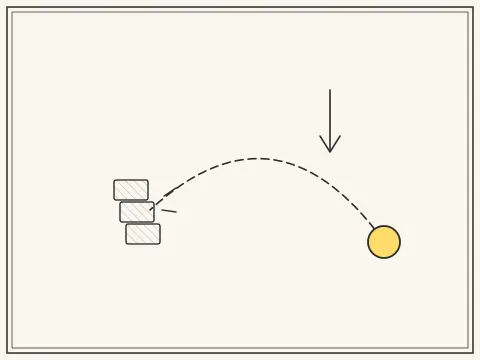
This article deconstructs the layered mechanism for grid-based movement and collision detection, built upon grid coordinates and physics tags. It details the push-box displacement logic and blockage checks using an occupancy table and reachability model, providing a direct technical path from rule definition to code implementation to help readers master core physics interaction principles.
Match-3 Mechanics: Crafting Satisfaction via Score Curves and Constraint Strategies
消除关卡

Match-3 Mechanics: Crafting Satisfaction via Score Curves and Constraint Strategies

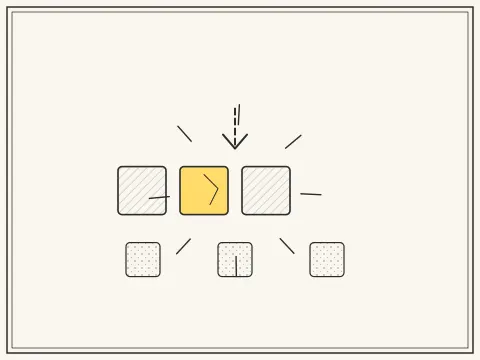
This guide dissects the non-linear mapping between chain length and score in match-3 games, detailing technical implementations for blocking infinite chains through dynamic generation and movement constraints. It further explains how to calibrate feedback timing to sustain player engagement, equipping developers with tools for numerical balancing and level pacing.

Physics Cutting: Balancing Detection, Performance, and Precision
推荐动作

Physics Cutting: Balancing Detection, Performance, and Precision

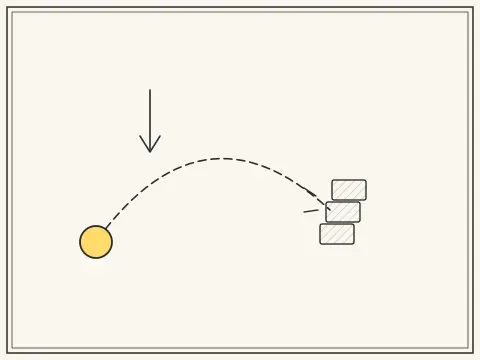
A deep dive into physics cutting mechanisms, covering collision box, ray, and grid detection strategies. It details rigid and soft body slicing approaches and analyzes dynamic precision balancing based on cut count and physics budget, offering direct solutions to common issues like stuttering and clipping.

Three-Card Climb Lab: A Choice/Strategy Playground Where the Choice Space Is a Dial
策略决策成长 / 数值

Three-Card Climb Lab: A Choice/Strategy Playground Where the Choice Space Is a Dial

Pick 1 card per round; your stats auto-resolve against a guardian that grows each round. Sliders expose the choice space itself as the difficulty dial.

Infinite Progression: Balancing Exponential Cost Curves and Simulated Infinity
点击放置

Infinite Progression: Balancing Exponential Cost Curves and Simulated Infinity

This guide deconstructs cost scaling and milestone thresholds in clicker/idle games to implement sustainable 'simulated infinity.' By combining non-linear cost growth with periodic system unlocks and prestige mechanics, developers can maintain player engagement without triggering late-game collapse, offering a high-execution framework for solving retention issues in pseudo-infinite loops.

Pacman City: Turning "Dodge the Ghosts" into Timed Route Planning
躲避解谜

Pacman City: Turning "Dodge the Ghosts" into Timed Route Planning

120 seconds, 3 lives, 323 dots: eat and dodge through a block-city maze, where the 8-second power-pellet reversal is the only rhythm switch that matters.

Roguelike Level Design: Random Pool Architecture and Build Power Scaling
Roguelike战斗

Roguelike Level Design: Random Pool Architecture and Build Power Scaling

A deep dive into constructing random pools and managing build power curves in Roguelikes. This guide details room event pool configuration, weight constraints, and budget-based allocation strategies to prevent power creep. It covers techniques for ensuring key node appearances, implementing soft-correction mechanics for player progression, and designing explainable randomness to deliver a rich yet balanced procedural generation system.

Stream Runner: Difficulty as a Speed Curve, UI Reduced to Two Buttons
行进 / 跑酷躲避

Stream Runner: Difficulty as a Speed Curve, UI Reduced to Two Buttons

A minimalist auto-runner case study: score equals distance, a one-obstacle-one-button mapping, and how a 0.6s dodge window keeps high speeds readable.

Same Rules, New Feel: A 3D Makeover for Solved Tic-Tac-Toe
回合棋盘

Same Rules, New Feel: A 3D Makeover for Solved Tic-Tac-Toe

Tic-tac-toe is a solved game — optimal play always ends in a draw. See how 3D rotation, sound and confetti rebuild the feel without changing a single rule.

Number Merge (2048 Variant): Failure Probability Control and Perceived Randomness
消除生成

Number Merge (2048 Variant): Failure Probability Control and Perceived Randomness

Deep dive into the core mechanics of number merge variants: dynamically adjusting failure probability thresholds to softly control difficulty, avoiding unwinnable states while maintaining tension. The article details the pseudo-random generation algorithm logic, ensuring number distribution appears random yet remains controlled, precisely balancing player experience with numerical stability to help developers build high-retention elimination levels.

8-Ball Pool: One Drag, Two Modules, and a Full Rules Engine Behind Every Shot
物理射击

8-Ball Pool: One Drag, Two Modules, and a Full Rules Engine Behind Every Shot

A physics rebuild of 8-ball pool: drag distance folds into 18 power levels, all-stopped settlement keeps the rules trustworthy, and AI aim error keeps it alive.

Bubble Shooter: Aim Once, Score by the Cascade
射击解谜

Bubble Shooter: Aim Once, Score by the Cascade

A bubble-shooter teardown: aim angle folds into a column pick, 8-way pops raise density, and a ceiling drop every 10 shots makes pressure countable.

Page 1 of 4 · 39 posts
PrevNext