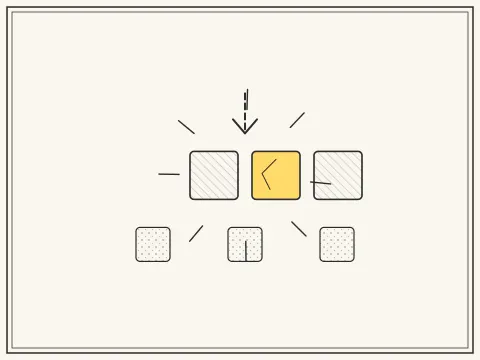
Number Merge (2048 Variant): Failure Probability Control and Perceived Randomness
消除生成

Number Merge (2048 Variant): Failure Probability Control and Perceived Randomness

Deep dive into the core mechanics of number merge variants: dynamically adjusting failure probability thresholds to softly control difficulty, avoiding unwinnable states while maintaining tension. The article details the pseudo-random generation algorithm logic, ensuring number distribution appears random yet remains controlled, precisely balancing player experience with numerical stability to help developers build high-retention elimination levels.
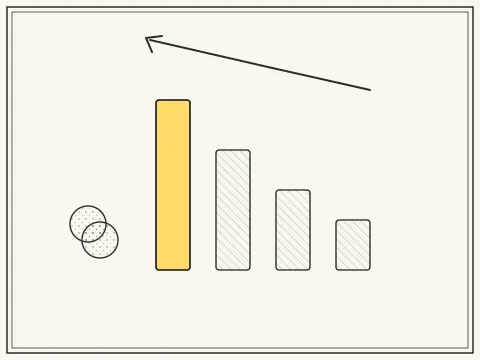

Tap-to-Evolve: Feedback Loops and Inflation Thresholds
推荐点击

Tap-to-Evolve: Feedback Loops and Inflation Thresholds

This article deconstructs the tap-to-evolve mechanic, analyzing the click feedback loop and numerical inflation thresholds. It details how clicks drive upgrade pacing and maintain numerical readability, equipping developers with core loop design and balance strategies for casual games.

Organizing Combat Unit Behavior with State Machines
战斗状态机

Organizing Combat Unit Behavior with State Machines

This article dissects the state machine pattern for combat units, detailing how to decompose complex logic into independent state nodes. Readers will master constructing state transition tables to eliminate verbose conditional checks, enabling visual debugging and low-cost expansion while effectively resolving multi-behavior coupling challenges.

Football Kick: Compressing a Penalty Shootout into an Angle-by-Power Judgement Table
动作物理

Football Kick: Compressing a Penalty Shootout into an Angle-by-Power Judgement Table

A 5-round penalty duel compressed into an angle-by-power table: three judgement bands — miss zone, risk zone, sweet spot — rule goal, save or miss.

Penalty Kick: One Shot, Two Inputs, Five Rounds of Mounting Pressure
射击时机 / 反应

Penalty Kick: One Shot, Two Inputs, Five Rounds of Mounting Pressure

A minimal penalty shootout: angle and power feed a probability model, every miss scores for the keeper, and a five-round sprint decides the match.

Stream Runner: Difficulty as a Speed Curve, UI Reduced to Two Buttons
行进 / 跑酷躲避

Stream Runner: Difficulty as a Speed Curve, UI Reduced to Two Buttons

A minimalist auto-runner case study: score equals distance, a one-obstacle-one-button mapping, and how a 0.6s dodge window keeps high speeds readable.

Survival Countdown: Designing Time Pressure and the 'Final 10 Seconds' Effect
关卡动作

Survival Countdown: Designing Time Pressure and the 'Final 10 Seconds' Effect

Analyze time pressure mechanics focusing on non-malicious dynamic curves and forgiveness windows. Deep dive into the 'Final 10 Seconds' effect to reveal how countdowns alter risk-reward ratios, driving players toward aggressive decisions in high-stakes endings, providing empirical strategies for building urgency in action-dodging levels.

Page 1 of 1 · 7 posts
PrevNext