Core Mechanics of Merge & Upgrade Systems
A deep dive into merge and upgrade mechanics, breaking down merge rules, production pacing, and in-game feedback loops. The article outlines the implementation path from gameplay goals to core loops, offering reusable data structures and key numerical design principles to help developers build accessible, high-growth idle merge systems.
분석
- Enable players to continuously make 'optimal choices'
- Amplify small rewards through visual feedback
- Produce resources → Merge & Upgrade → Unlock new units → Boost production
- Merge table-driven: Upgrade outcomes determined by configuration
- Reversible actions: Replay via event logs
- Embed 'pacing' into numerical curves: Deliver strong feedback every N merges
핵심 코드
데모
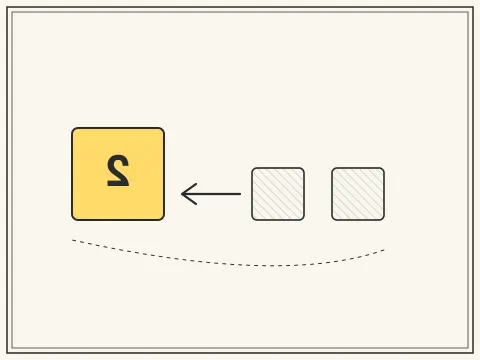
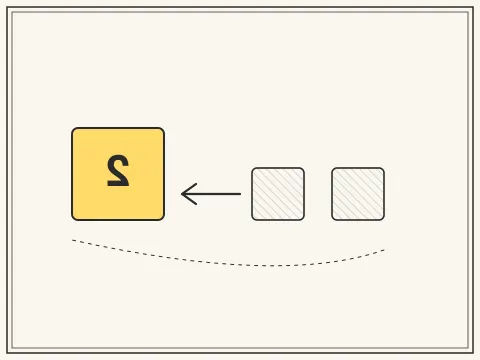
Minimal interactive demo: a 2-into-1 merge chain (demonstrates table-driven rules and merge pacing).

아티클
Core Logic of Merge & Upgrade Gameplay
Merge & Upgrade gameplay might look simple: combining two identical items to create a higher-tier one. However, its addictive nature relies not on the merge rules themselves, but on output pacing, feedback intensity, and bottleneck design.
This article breaks down the core of Merge into "modules you can reuse directly" and provides more robust engineering implementation approaches (table-driven, event logs, replayable).
---
1. The Essence of Merge: Turning "Repetitive Actions" into "Visible Growth"
What players repeatedly do is essentially one thing: making the situation better.
Therefore, the design goal is not to "keep players merging," but to ensure players have clear, visible rewards at every stage:
- Merging produces "stronger units" or "higher output"
- Unlocking new units creates "new objectives"
- Bottlenecks motivate players with the feeling of "I'm just one step away from passing"
---
2. The Minimal Core Loop (Closed Loop)
A functional minimal closed loop:
- Produce resources/units (automatically or manually)
- Player chooses placement and merging
- Merging produces higher-tier units (bringing higher output or stronger abilities)
- Unlock new units/grid cells/areas
- Enter the next round with a higher goal
From an engineering perspective, it is recommended to decompose this loop into three types of events:
spawn(production)move/swap(movement and layout)merge(merging and upgrading)
This makes implementing "undo/replay/recording" much easier later on.
---
3. Merge Rules: Must Be Table-Driven (Do Not Hardcode in Logic)
The most common pitfall: writing merge rules as if (a.level===b.level) a.level++.
Once you need to implement:
- Different branches (A merges to B, B merges to C, etc.)
- Special units (requiring 3-in-1 merges or cross-level merges)
- Costs (spending gold/stamina/materials)
Hardcoding will break quickly.
It is recommended to use a merge table to drive the logic:
from -> tocostfx(effects/sound)unlock(whether new content is unlocked)
This allows designers and developers to collaborate on the same configuration file.
---
4. Output Pacing: Bury the "Highs" into the Curve, Rather Than Stacking Content
Merge retention largely comes from pacing design:
- Small rewards: Every merge provides feedback (sound effects, flashes, jumping numbers)
- Big rewards: Every N merges gives a strong feedback (new units, loot boxes, expansion, skills)
A simple, actionable approach:
- Drive strong feedback using a "merge counter" or "milestones"
- Use "rare drops/random events" for variety (but keep it controlled to avoid a feeling of gambling losses)
The key point: Strong feedback must be predictable (players know they are working towards it).
---
5. Bottlenecks (Gates): Don't Rely Solely on "Higher Numbers"; Let Players Make Choices
Common bottlenecks in Merge:
- Not enough grid space (space pressure)
- Output is too slow (time pressure)
- Key units are hard to merge (combination pressure)
A better bottleneck does not just force players to "grind," but guides them to make choices:
- Should you merge a high-tier unit that takes up space, or clear the field first?
- Should you expand the grid, or increase output first?
- Should you "sell/recycle" low-tier units for resources?
When players feel "I lost because I made the wrong choice," rather than "the system's numbers blocked me," the experience improves significantly.
---
6. Engineering Implementation: Use Event Logs to Ensure Replayability and Debuggability
If you convert all actions into events (spawn/move/merge), you gain:
- Bug reproduction: Record the event sequence to reproduce issues
- Undo/Redo: Roll back or recalculate based on events
- Replay/Recording: Play events chronologically
The minimal implementation can also be simple:
- Within a session: store
events[] - On each action: generate an event, update state
- For debugging: output events as JSON
---
7. Minimal Acceptance Checklist (Must Test Before Launch)
- [ ] Merge rules table: Every
fromcan find ato(or is explicitly unmergeable) - [ ] Space pressure: How to handle production when the grid is full (pause production/convert to reward/auto-merge?)
- [ ] Boundary between merge and move: Does dragging to an invalid position cause a bounce-back?
- [ ] Resource consistency: Gold/materials will not appear negative or double-deducted
- [ ] Save/Load: State is consistent after loading (grid, units, counters, milestones)
Edge Cases
- Need to handle whether production pauses, converts to a reward, or triggers auto-merge when the grid is full
- Need to handle bounce-back or cancellation of operations when dragging to an invalid position
- Need to handle priority judgment when merge and move operations conflict
- Need to handle cases where resource deduction results in negatives or double deductions
- Need to handle whether counters, milestones, and other states are consistent after loading a save
Design Trade-offs
- Benefit: Flexibility and maintainability driven by the merge table; Cost: Increased initial configuration workload; Alternative: Hardcoded rules, but difficult to scale
- Benefit: Replayability, debuggability, and undo capabilities driven by event logs; Cost: Increased storage and computation overhead; Alternative: Store only keyframes or rely on in-memory state rollback
함께 볼 만한 글
A deep dive into the Merge Evolution mechanic, breaking down hierarchical chain design and rarity drop mechanics. We quantify the numerical balance of blockers and unlock thresholds, offering controlled pacing strategies to prevent player churn and build high-retention merge chains.
A deep dive into the core mechanics of merge-based casual games, covering grid retrieval, type validation, and item spawning logic. The article details the complete design loop from gameplay objectives to the economic system, analyzes balance challenges in merge rules and UI interaction nuances, and provides scalable directions for content production to help developers build robust merge mechanics.
This guide deconstructs cost scaling and milestone thresholds in clicker/idle games to implement sustainable 'simulated infinity.' By combining non-linear cost growth with periodic system unlocks and prestige mechanics, developers can maintain player engagement without triggering late-game collapse, offering a high-execution framework for solving retention issues in pseudo-infinite loops.