Merge Evolution: Designing Merge Chains and Strategic Blockers
A deep dive into the Merge Evolution mechanic, breaking down hierarchical chain design and rarity drop mechanics. We quantify the numerical balance of blockers and unlock thresholds, offering controlled pacing strategies to prevent player churn and build high-retention merge chains.
분석
- Keep hierarchy levels few and clear
- Assign unique visuals/SFX to key tiers
- Help players visualize the next evolution stage
- Space pressure
- Output cooldowns
- Task objective locks
- Insertion of rare materials
핵심 코드
데모
아직 전용 데모가 없어, 해당 아키타입의 최소 플레이 가능 예제를 대신 넣었습니다.
아티클
Merge: The Synthesis Chain is the Content, the Bottleneck is the Rhythm
The One-Sentence Essence
On the surface, it's a level that restricts player progress; in reality, the core mechanism is to regulate the rhythm by creating "artificial bottlenecks" through gaps in space, time, or resources. This article focuses on explaining how to design four controllable bottlenecks, allowing players to naturally encounter obstacles when they feel things are going smoothly, sparking the impulse to "switch up their playstyle."
Traffic Driver: Strong visual gratification (the instant of synthesis, appearance upgrades), leading to high short-video conversion.
1) Synthesis Chain Design: Players Remember Not "Numbers," but "What the Next Tier Looks Like"
A useful synthesis chain template:
- Don't have too many tiers: Suggest keeping a single chain to within 7~10 tiers.
- Key tiers (milestones) must "look different": Appearance/size/effects must change in at least one aspect.
- Give players a "preview": Let players see in the UI "I'm one tier away from this cool item."
If every tier is just a slight color adjustment, players will lose the motivation to "chase."
2) How to "Artificially Create" Bottlenecks
Bottlenecks are not brakes; they are more like a prompt to "switch up your play." There are four common controllable bottlenecks:
- Space Pressure: Grids are nearly full, forcing players to make trade-offs (delete/sell/synthesize/open new grid).
- Production Cooldown: Generators have a CD, forcing players to start planning "which chain to make first."
- Objective Task Lock: A key synthesis requires completing a task first (e.g., clearing obstacles, delivering orders).
- Rare Material Insertion: Making a specific tier require extra materials (most like a "gate"), used to control progress and monetization points.
Experience: Bottlenecks work best when they appear when players just feel things are going smoothly, rather than locking them out right at the start.
3) The "Explainability" of Bottlenecks Determines Reputation
Players are willing to accept bottlenecks provided:
- I know exactly what I'm missing (materials/space/time).
- I know how to fill the gap (play a few rounds, complete tasks, use items).
- I feel the filling process is also advancing (not just pure waiting).
Boundary Conditions
- Need to handle the trade-off logic when space pressure causes grids to be about to fill up.
- Need to handle how generator cooldown time (CD) interrupts player synthesis planning.
- Need to handle how objective task locks block key synthesis paths.
- Need to handle situations where player progress is forcibly paused due to missing rare materials.
- Need to ensure bottlenecks appear when players just feel things are going smoothly, avoiding locking them out right at the start.
Design Trade-offs
- Benefit: Bottlenecks let players know what they're missing and how to fill it, and the filling process advances progress; Cost: Players must accept the prompt to "switch up their play," rather than just waiting.
- Benefit: Controlling progress and monetization points through rare material insertion; Cost: If mishandled, it can cut off the player experience like a "gate."
- Benefit: Using space pressure to force players to make decisions (delete/sell/synthesize/open new grid); Cost: Players need to constantly weigh options within limited grids, increasing operational burden.
One-sentence summary: The synthesis chain is responsible for "wanting it," the bottleneck is responsible for "when to give it."
함께 볼 만한 글

A deep dive into Match-3 core mechanics, focusing on the intensity stratification logic for 3/4/5-match eliminations. Through quantitative analysis of satisfying elimination triggers and dynamic checkpoint control strategies, we reveal how to drive user retention via rule design. Content covers constrained random generation algorithms and level pacing, aiming to help developers build high-engagement elimination experiences and improve game balance.
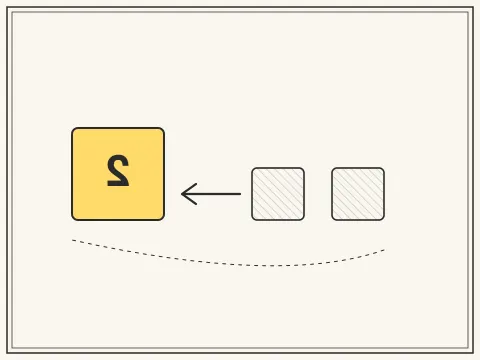
A deep dive into merge and upgrade mechanics, breaking down merge rules, production pacing, and in-game feedback loops. The article outlines the implementation path from gameplay goals to core loops, offering reusable data structures and key numerical design principles to help developers build accessible, high-growth idle merge systems.
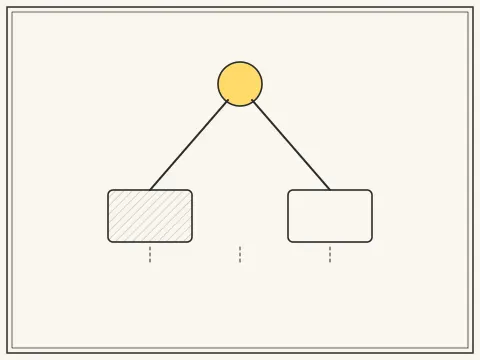
A deep dive into tower defense wave data structures and enemy scheduling logic. We explore wave DSL configuration for pressure curves and intelligent spawning strategies, offering a complete solution from basic numerical balancing to dynamic level pacing to help developers build flexible and varied tower defense stages.