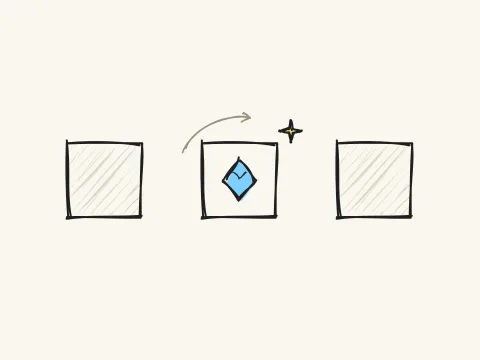
Puzzle

Centered around information hiding and inference to create solution spaces; the core is learning curves and hint strategies.

What is it

Observe the clues, reason it out, and find the one solution — Sokoban, Monument Valley, and escape-room games are built on this.

How it plays

You stare at the layout in deep thought, try a step, read the feedback, try again; the "aha" moment arrives like a door swinging open — the agony of being stuck and the ecstasy of insight are two sides of one coin.

Why learn it

A core specimen of learning-curve design — how to keep players stuck-but-not-quitting is the most important lesson puzzles teach.

Puzzle play is a carefully engineered "duration of confusion": information is deliberately withheld, the reasoning chain is sized to be just barely walkable, and every trial returns verifiable feedback. The hard part is not a clever riddle — it is managing the cost of being stuck: hints that are too strong kill the achievement, too weak cause abandonment, and unverifiable feedback leaves players unsure whether they are advancing or regressing. The joy of insight is farmed precisely by the rhythm of information disclosure.

Why This Mechanic Matters
For Players

Puzzles sell the "aha" moment: information is deliberately withheld and the player completes it with their own reasoning — an achievement that cannot be lucked into, and is precious for exactly that reason. The agony of being stuck and the joy of insight are carefully rationed by the designer into a unique intellectual high.

For the Ecosystem

Puzzle is a word-of-mouth long-tail category: costs are controllable, content production IS level design, and a small team with brilliant levels can build a brand (Monument Valley, Baba Is You).

Transferable Craft

Learn puzzles and you learn the rhythm of information disclosure — what to hide, when to hint, how to let players walk to the answer themselves — a craft that transfers to tutorial design, narrative guidance, and even product onboarding.
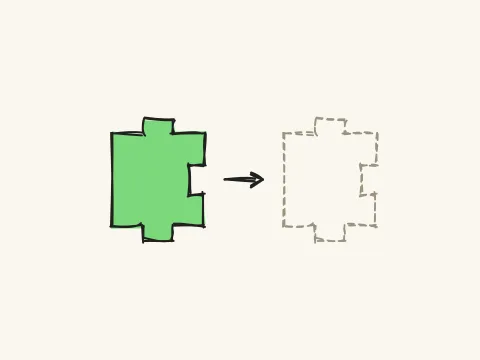
Play Behavior
Puzzle
Gameplay Features
Complexity
Beginner → Advanced
Learning Goals
  • Beginner: understand the puzzle loop — observe → act → verify feedback → reason the next step — and reproduce one trial and one hint in the demo
  • Intermediate: write the feedback contract (instant right/wrong/neutral verification) and the graded-hint policy (budget, tiers, trigger timing)
  • Advanced: design reasoning-chain length ramps and the learning curve, and verify puzzle health with stuck rate, hint usage rate, and time-between-insights

② Instant Playable Demo

Puzzle Demo
Loading game…
Rule Hints
Rule: Observe information → Perform action → Receive feedback → Infer next step → Achieve goal
Lab Guide: treat the demo as an experiment
Trial-and-Error Verification
Do: Without reasoning, click "Try (primary)" ten times and watch mistakes and progress diverge
Observe: Every step returns a right/wrong signal — mistakes climbing while progress stalls means you are guessing. Verifiable feedback is the minimal rule of puzzles: without it, players cannot tell whether they are advancing or regressing
Hint Cost Experiment
Do: Get stuck on purpose, click "Hint (secondary)", then continue — watch the hints budget drain
Observe: Hints lower the cost of being stuck but spend a budget — too strong kills the achievement, too weak causes abandonment. Graded hints essentially convert "quit rate" into "resource spend": players buy back their sense of accomplishment
Difficulty Curve Contrast
Do: On easy vs hard, "Advance 1 Step" 10 steps each and compare difficultyScore and mistake growth
Observe: On hard, difficultyScore is higher and mistakes grow faster — difficulty is not "a better-hidden answer" but "a longer reasoning chain." Learning-curve design controls how fast the chain lengthens, not how deeply the answer is buried

③ Behavior System Breakdown

3.1 Problems Solved
  • Clearly define objectives and actionable objects, avoiding the question 'What am I supposed to do?'
  • Use tiered hints to reduce frustration costs, encouraging players to keep trying.
  • Make trial-and-error feedback verifiable (correct/incorrect/progression), avoiding randomness and misdirection.
3.2 Minimal Ruleset
  • Goal: satisfy conditions (minimum: reach endpoint / trigger mechanism).
  • Constraints: operation limits (count / order / resources).
  • Feedback: every step can be verified (correct / incorrect / neutral).
3.3 System Loop (optional)
Input → Judgment → Feedback → State change → New input
Design Notes
Hints trade abandonment rate for resource spend: graded hints let players "buy back their sense of achievement" — the hint budget turns a stuck moment from a churn point into a decision point.
Difficulty is not hiding deeper — it is chaining longer: a long reasoning chain with per-step verification beats a "well-hidden answer," because the former gives progress while the latter only invites guessing.
Slightly missing clues spark exploration (counterintuitive): when information runs a little scarce, players voluntarily try multiple strategies — but only if every step’s feedback is honest; otherwise scarcity becomes deception.

④ Common Combos & Variants

Puzzle + Physics
Physics causal chains provide richer solution spaces.
Puzzle + Random
Reconfiguring the state increases replayability, but explainability must be controlled.
Puzzle + Progression
Gradually unlock tools and rules, expanding reasoning ability.
⑤ Advanced Design & Algorithms (collapsed)Click to expand
Design Warnings
  • Lack of verifiable feedback prevents players from assessing progress.
  • Too strong hints break the sense of achievement; too weak hints lead to abandonment.
  • When the solution is unique but the path is long, frustration is amplified.
  • Too many hints weaken the challenge; too few cause players to get lost—balancing information is the core design trade-off.
  • Excessive randomization can increase replayability but undermines causal chain explainability, making players feel purposeless.
  • Over-simplifying hints can actually increase curiosity—players will proactively try multiple strategies when lacking clues.
Algorithm Examples
  • Levels: solvability verification, solution search, hint generation
  • State: state machine / condition graph, used to express causal chains
⑥ Related Case Articles

Multiple Endings: Trigger Conditions and Player Path Guidance
A deep dive into crafting multiple ending triggers and player path guidance systems. By quantifying core elements, we define clear completion thresholds, build a tiered hint system ranging from strong to no guidance, and design dynamic feedback to balance exploration freedom, helping developers efficiently construct multi-ending narrative structures.
One-Line Drawing: Graph Generation Algorithms and Difficulty Scaling
Deep dive into the mechanics of one-line drawing puzzles: using Euler path logic to validate solvability and controlling node degrees to generate unsolvable or single-solution levels. Systematically explains how branching points and loops quantify difficulty, demonstrating how algorithms dynamically add misleading edges to boost challenge. Readers will master graph theory applications in level generation and learn to build playable, clearly tiered puzzles.
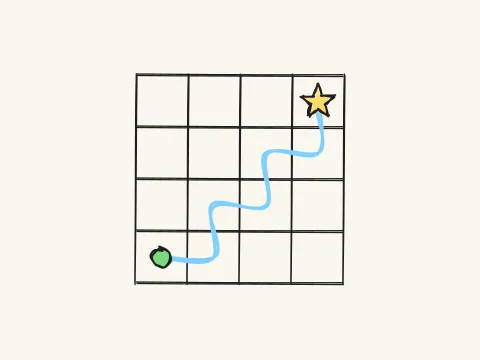
Path Planning: Balancing Pseudo-Puzzle Design and Multi-Solution Trade-offs
This article deconstructs pseudo-puzzle mechanics and solution space design, analyzing how to build an open solution space using limited game mechanics. It details verifiable generation techniques to maintain logical consistency while precisely balancing the fun of multi-solution exploration against the efficiency of single-solution guidance, offering developers core strategies for controlling randomness.
Pull the Pin: Sequential Penalties and 'Fake Difficulty'
Deconstructing the penalty mechanics and fake difficulty design in pull-the-pin puzzles. The article analyzes how sequence errors trigger immediate restarts, leveraging low forgiveness to create a 'seemingly hard, actually fake' challenge experience. It reveals the underlying logic of building levels via rule-based constraints rather than complex operations, offering high-value design references for puzzle games.
Spot the Difference: Mechanics for Robust Puzzle Design
An in-depth analysis of difference point types and distribution logic to prevent instant completions. Learn how to implement visual guidance systems that regulate scanning pace, enhance puzzle depth, and design efficient hint mechanisms that deter cheating while ensuring a compelling player experience.