Progression
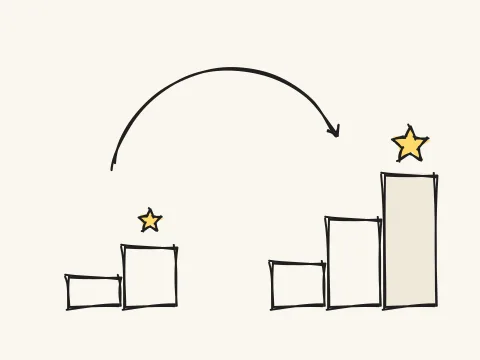
Shape long-term goals through accumulation and curves; the core is controllable progression and stage thresholds.
Finish a run, collect resources, level up, and go further next time — RPG leveling and the permanent power-ups between runs in Vampire Survivors are built on this.
You died this run, but the experience banked and your power grew; next run you clearly feel "I'm stronger now" — even failure becomes an investment, and it keeps you hooked.
The classic engine of long-term retention — stringing small wins into a visible growth line that keeps players saying "one more level, then sleep".
Progression play converts time spent into irreversible ability assets: every action produces output, failure pays a guaranteed floor, and staged thresholds keep unlocking new goals. The hard part is not the numbers — it is the rhythm and fairness of the curve: steeply rising costs kill motivation, too-fast growth burns content, and pure grind or pure pain both churn players. "One more run" comes from the precise sense of distance — the next level never looks far away.
Progression gives players the certainty that time spent is time banked: even a loss makes you stronger, so no run is ever wasted.
Meta-progression is the core engine of retention economics: guaranteed payouts keep frustration from churning players, milestone unlocks spread content consumption across long-term goals, and the cost curve plus stamina economy directly set the LTV ceiling of a long-running title — the commercial miracles of roguelikes and idle games are mostly built on this structure.
Learn progression design and you learn to assetize player time: cost curves, pity compensation, threshold unlocks — a structure that ports to anything that needs retention, from battle passes to learning apps.
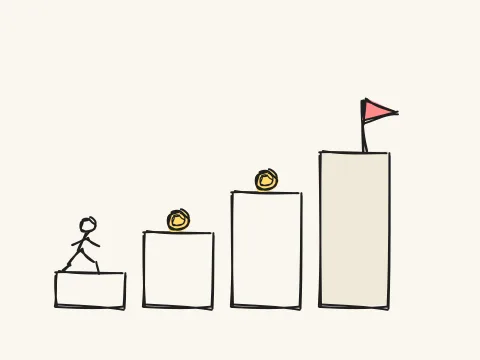
- Beginner: understand the growth loop — act → earn resources → upgrade/unlock → power up → new goal — and reproduce one upgrade in the demo
- Intermediate: write the cost-curve and guaranteed-floor contract (escalation rule, failure payout, streak-compensation trigger) and tune the growth rate
- Advanced: design threshold pacing and unlock rhythm (the milestone map), and verify long-term health with retention curve, farming-profit margin, and threshold attainment rate
② Instant Playable Demo
③ Behavior System Breakdown

- Ensure failure still yields growth (guaranteed returns/experience), reducing frustration and churn.
- Balance permanent stats with short-term skills, avoiding pure grind or pure punishment.
- Use milestone unlocks to guide return and exploration, creating sustainable goals.
- Resources: Gain 1 energy per click; energy can be spent on upgrades or unlocks.
- Upgrade: Cost = current level × 10; after upgrading, stat increases by +1.
- Threshold: Every 100 energy unlocks a new ability; thresholds increase by 50 each time.
④ Common Combos & Variants
⑤ Advanced Design & Algorithms (collapsed)Click to expand
- Excessively high upgrade costs can sap player motivation, while too low costs diminish challenge and sense of achievement. Designers must balance the cost curve with player investment to maintain both challenge and satisfaction.
- An overly rapid growth curve shortens the game's lifespan, whereas a sluggish one leads to player attrition. Appropriately setting growth rates and milestones can extend the experience cycle.
- Lacking stage goals makes progression feel meaningless. Each threshold should be tied to a visible reward or new gameplay element to sustain player motivation.
- When players forgo immediate gains for long-term growth, the overall experience can improve, as long-term goals provide sustained motivation. Designers should introduce predictable milestones early on to encourage players toward larger objectives.
- Stats: segmented curves, guaranteed returns, and anti-grind mechanisms.
- Economy: inflation control, caps, and soft caps.