Timing
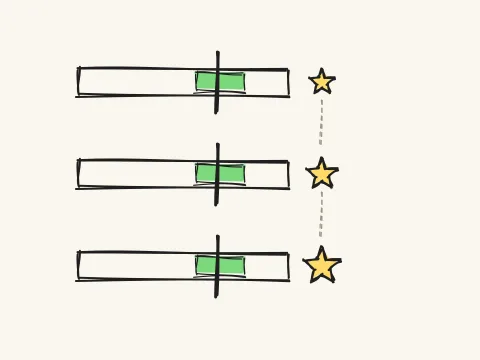
Create challenge through windows, beats, and reactions; core is judgment zones and feedback latency.
Tap in time with the beat or the perfect moment — the more precise, the higher the score. Rhythm Master, Taiko no Tatsujin, and rhythm games in general are built on this.
A ring shrinks toward the judgment circle and you strike at the exact overlap; when Perfect pops up, your finger and heartbeat are in sync — nailing it is pure relief, missing makes you instantly want another shot.
It is the ultimate specimen of "feel engineering" — invisible millisecond parameters like the judgment window and feedback latency decide whether a game feels good in the hand.
Timing play externalizes "skill" as a millisecond-scale judgment window: every tap is measured as a deviation from the ideal moment, and rewards scale as the deviation shrinks. The hard part is not the window itself — it is consistency and synchronization: an audio-video error of just a few milliseconds is enough for players to feel "misjudged," and opaque judgment rules snap the learning curve. The player’s sense of "I’m getting better" rests on the premise that judgment is always honest.
Timing play sells mastery itself: the judgment window quantifies skill into milliseconds, and players watch themselves climb from fumbling to flawless. The instant a Perfect lands, rhythm and nerves sync — a satisfaction few other feedbacks can match.
Rhythm games hold one of the steadiest core communities in the industry: content expands per track, and the judgment feel is a moat competitors cannot copy.
Learn timing and you learn feel engineering — judgment windows, feedback latency, audio-video sync at millisecond scale — fundamentals that fighting games, shooters, and even clickers cannot do without.
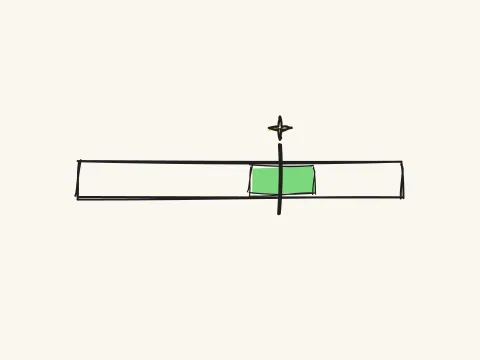
- Beginner: understand the minimal loop — beat spawn → input → judge → feedback — and reproduce one Perfect judgment in the demo
- Intermediate: write the judgment contract (Perfect/Good/Miss windows, timeout handling, combo rules) and combine window width with BPM into distinct feels
- Advanced: design progressive windows and tempo-shift sections (learning-curve engineering), and verify feel health with judgment distribution and combo retention
② Instant Playable Demo
③ Behavior System Breakdown
- Make judgment windows interpretable and consistent, reducing the feeling of pressing correctly but being judged wrong.
- Use tolerance and reward design to create a progression curve that accommodates both beginners and experts.
- Use beat sections to create peaks and recovery zones, controlling fatigue and tension.
- Balance window width: too narrow frustrates beginners, too wide weakens challenge.
- Delayed feedback can enhance rhythm sense: moderate delay lets players anticipate beats.
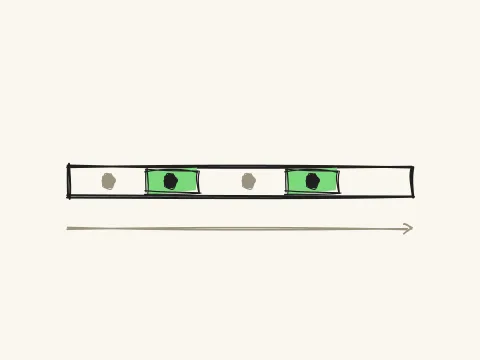
- Window: Each beat defines a time interval; Perfect ±30 ms (60 ms window), Good ±70 ms (140 ms window), Miss >70 ms; total window duration 140 ms.
- Beat: Rhythm generated at fixed or variable BPM, using an event queue to pre-schedule timestamps, supporting real-time tempo changes.
- Feedback: Trigger sound, vibration, and visual highlight based on judgment level; minimum is visual highlight; audio-visual sync error ≤5 ms.
④ Common Combos & Variants
⑤ Advanced Design & Algorithms (collapsed)Click to expand
- Audio-visual sync loss will directly ruin timing mechanics.
- Opaque judgment rules will break the learning curve.
- Too narrow windows without progression will cause frustration spikes.
- Excessive delayed feedback will weaken immediacy, causing rhythm imbalance.
- Judgment: timeline, window calculation, delay compensation
- Rhythm: event queue, BPM changes, sheet generation